Dust Bowl
The Dust Bowl is the defining environmental catastrophe of the 1930s Southern Plains, and in John Steinbeck's The Grapes of Wrath it serves as the inescapable catalyst for the entire narrative. The novel opens with its onset, traces its devastating effects on the land and the people, and makes it the reason the Joad family—along with a quarter of a million other displaced farmers—abandons Oklahoma for the promised but often brutal West. The Dust Bowl is not merely a backdrop; it is an active, shaping force, a slow violence that strips the topsoil, destroys the crops, and finally breaks the human community that had lived on the land for generations. Its presence in the novel is both a literal historical event and a profound symbol of a natural and economic order gone wrong, a prelude to the larger dispossession that awaits the migrants in California.
The Onset and Physical Devastation
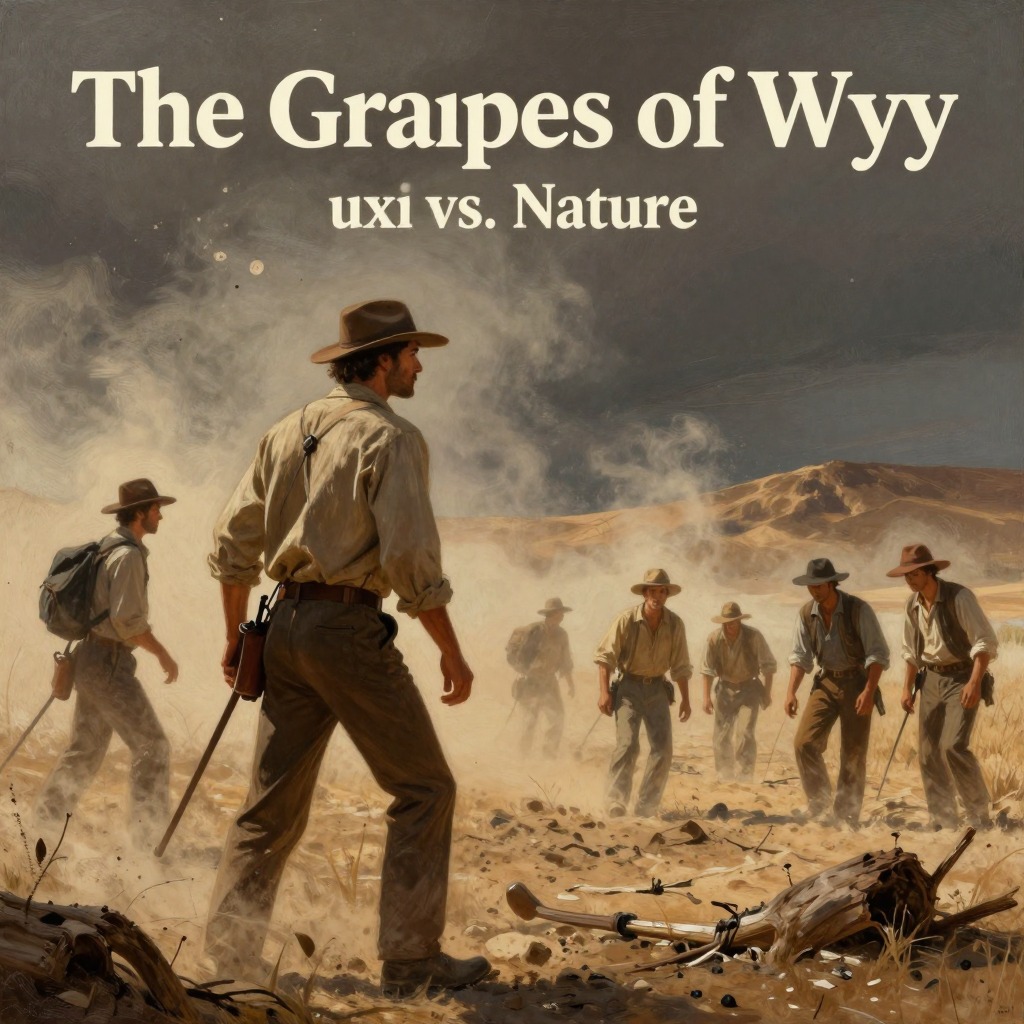
The novel's first chapter is a meticulous, almost documentary account of the Dust Bowl's arrival. The last rains of spring come gently, but by the end of May the sky grows pale and the sun flares down on the growing corn. The clouds appear and go away, and then they do not try any more. The surface of the earth crusts, a thin hard crust, and as the sky becomes pale, so the earth becomes pale. In the water-cut gullies the earth dusts down in dry little streams. By June the sun shines more fiercely, the brown lines on the corn leaves widen, and the weeds fray and edge back toward their roots. Every moving thing lifts the dust into the air: a walking man lifts a thin layer as high as his waist, a wagon lifts it as high as the fence tops, and an automobile boils a cloud behind it. The wind grows strong and hard, working at the rain crust in the corn fields, loosening the dust and carrying it away. The finest dust does not settle back to earth but disappears into the darkening sky. The dawn comes, but no day; in the gray sky a red sun appears, a dim red circle that gives a little light, like dusk. Men and women huddle in their houses, tying handkerchiefs over their noses and wearing goggles to protect their eyes. The dust is evenly mixed with the air, an emulsion of dust and air, and it settles like pollen on the chairs and tables, on the dishes. The people brush it from their shoulders. Little lines of dust lie at the door sills. When the wind finally passes, the dust-filled air muffles sound more completely than fog does. In the morning the dust hangs like fog, and the sun is as red as ripe new blood. All day the dust sifts down from the sky, and the next day it sifts down. An even blanket covers the earth, settling on the corn, piling up on the tops of the fence posts and on the wires, blanketing the weeds and trees. The men stand by their fences and look at the ruined corn, drying fast now, only a little green showing through the film of dust. They are silent and do not move often. The women come out to stand beside their men, to feel whether this time the men will break. The children peek at the faces of the men and women, and then draw careful lines in the dust with their toes. After a while the faces of the watching men lose their bemused perplexity and become hard and angry and resistant. Then the women know that they are safe and that there is no break.
The Human and Economic Consequences
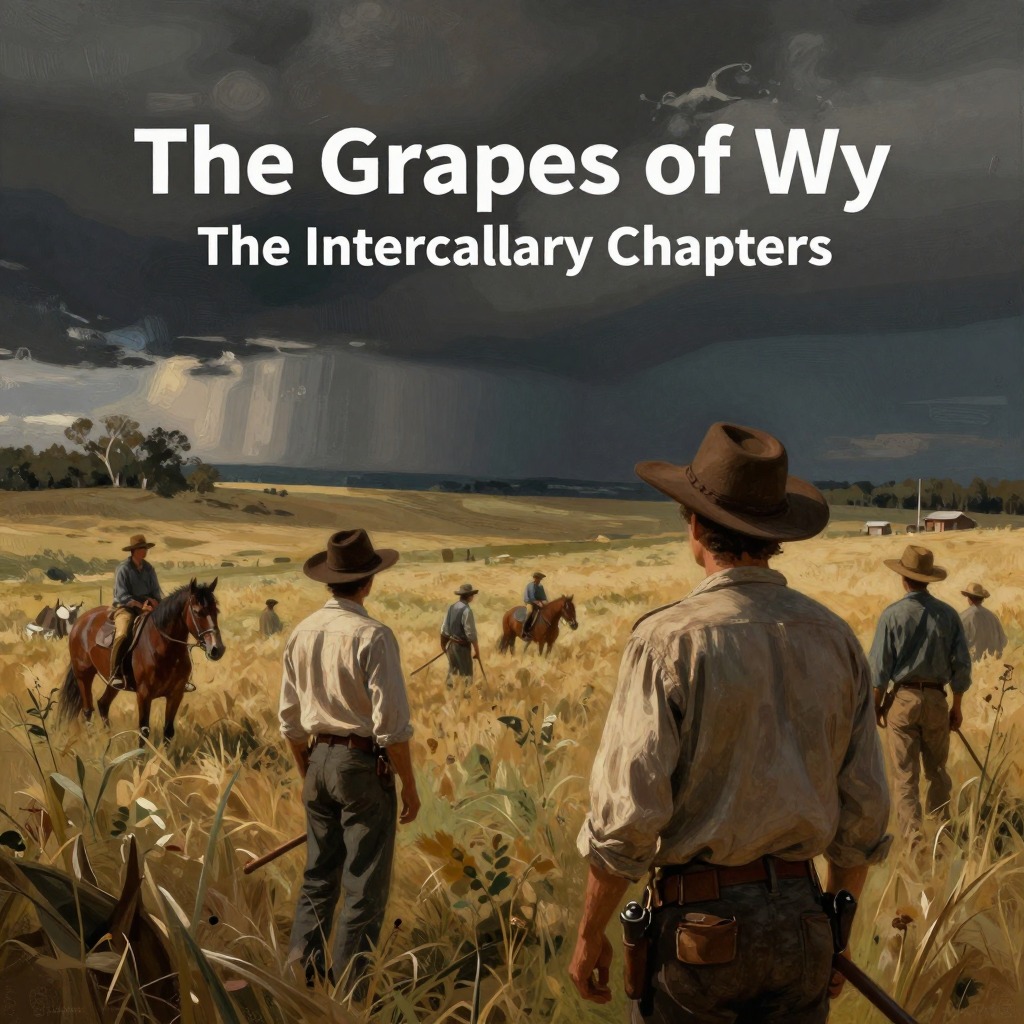
The Dust Bowl is not a natural disaster alone; it is the mechanism that triggers the economic and social collapse of the tenant farming system. The novel's intercalary chapters make this explicit: the dust and the shrinking land, the thunder of tractors and shrinking ownership, the desert's slow northward invasion, the twisting winds that howl up out of Texas, the floods that bring no richness to the land and steal what little richness is there—from all of these the people are in flight. The dust storms are the immediate cause, but they are inseparable from the larger economic forces that have already made the land vulnerable. The tenant men know the land is poor; they have scrabbled at it long enough. The dust only accelerates what cotton monoculture and debt have already begun. The novel's historical context reinforces this: the most devastating of all Dust Bowl storms occurred on Black Sunday, April 14, 1935, and the novel was published on the fourth anniversary of that date. Steinbeck's own research into the migrant situation, which produced the newspaper series "The Harvest Gypsies" and the unfinished novel "The Oklahomans," was driven by the worsening conditions in the winter of 1938, when thousands of families were marooned by floods in Visalia and Nipomo. The Dust Bowl, in the novel's telling, is the point where natural disaster and human economic failure converge to create a mass displacement.
The Symbolic and Narrative Function
Beyond its literal role, the Dust Bowl functions as a powerful symbol of sterility, loss, and the end of a way of life. The land that had been the source of identity and sustenance becomes a source of death and flight. The novel's title itself, drawn from Julia Ward Howe's "Battle Hymn of the Republic," links the natural disaster to a larger, almost biblical judgment: the grapes of wrath are filling and growing heavy for the vintage. The dust is the first sign of this wrath, the environmental consequence of a system that has abused the land and the people. It is the force that sets the Joads on the road, the mother road, Highway 66, which becomes the path of a people in flight from dust and shrinking land. The Dust Bowl is thus the origin point of the novel's entire journey, the place from which the migrants flee and the condition that makes their flight necessary. It is the first and most elemental of the many dispossessions the Joads will suffer, and its memory haunts them all the way to California.